Events11th May 2026
Key Takeaways from NextM - the Jungle Edition!

Article's author
Share article
We are still buzzing after an intense NextM Nordics 2026 event on May 5-6. The energy and impressions will stay with us like a mental tattoo, but way less painful.
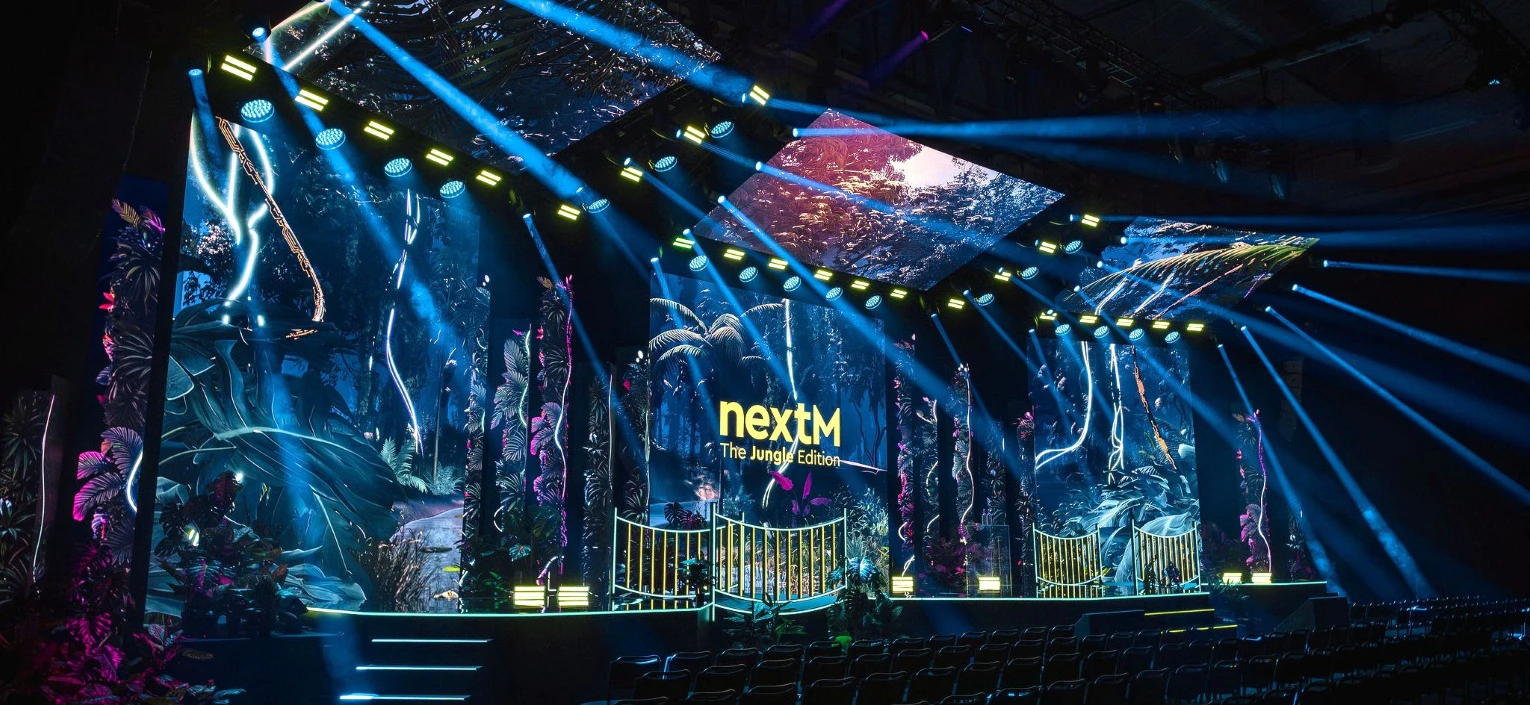
Jungles are warm, wild, and highly biodiverse. The event was our approach at replicating those characteristics, because it’s our conviction that those are the winning traits for our industry, brands, and marketers. Now, even more than before.
Trying to summarize 12 keynotes, 24 breakouts, multiple stage performances, robots karate kicking, butterfly drones taking flight and endless conversations in three themes is obviously futile. Nevertheless, we’re up for the challenge! Here are our field notes from NextM - the Jungle Edition.

WARM – (CREATIVITY)
The warmth of human connection was a recurring theme, pushing back against an industry that has become cold and clinical.
We are creating something people don’t want. It’s a hard truth, but the data from Orlando Wood at System1 is difficult to dismiss. He traced the industry’s reputational decline to one simple thing: a shift towards making stuff that people just don't like watching. The pursuit of optimization has led us away from art, and audiences have noticed. His discussion with Jesper Albansson turned into a well-deserved history lesson which pointed to the simple insight – better work, better results. Or as David Ogilvy more elegantly phrased it “You can’t bore people into buying your product, you can only interest them into buying it.”
But even as human ideation was emphasized, a new unexpected arena for creativity has emerged. In a lot of marketing, algorithms are as important as artists. To win, just as you need to be the best at artistry, you need to be the best at algorithms. And to do that, you first have to understand how they work. As Alex Steer from WPP pointed out, platform algorithms are designed for average performance. If you feed them average inputs, you’ll get average results. To achieve non-obvious results, non-obvious insights are required. You have to differentiate your audience, your creative, and your models to break out of the sea of sameness.
Another fascinating NextM topic was the biological proof of our emotional nature. AI expert and Neuroscience Researcher Shivvy Jervis referenced Antonio Damasio's research, “without emotion, we can't make decisions”. Studies show that people with damage to their brain's emotional centers struggle to make even simple, logical choices. This means that rationality doesn't exist in a vacuum; it is deeply intertwined with our emotional centers.

WILD (ADAPTABLE)
The jungle is unpredictable, and our approach to creativity must be too. We need to embrace the wildness of ideas and also the need to adapt to circumstances.
How do you find surprising ideas? You play. Damian Kulash of the band OK Go shared their process, which is less about thinking up ideas and more about finding them. Their formula is Wonder + Surprise. They create a "sandbox" to experiment in, like a zero-gravity plane, without a predefined plan. It’s in that chaos, that play, where they discover something new, something that could not have been conceived in a boardroom. It’s a production strategy he calls "play as planning." For all excel lovers it was fun to see the ambition to control the chaos in hyper-planned production in projects like obsession. Because you really need that balance: hyper freedom combined with hyper planning. The issue is to know when to do what - when you require control and when you need to let go.
This requires a culture that embraces managed chaos. INSEAD professor Erin Meyer took us inside Reid Hoffman’s Netflix, an organization built not on rules, but on "talent density." The philosophy is simple: if you hire stunning colleagues, you don't need to control them with policies and processes. You can remove the controls to increase freedom and speed. As she put it, the goal is to build a culture of innovation and creativity, which is often in direct tension with a culture of error elimination.

BIODIVERSE (HUMAN+1)
Our ecosystem is evolving, with new species of intelligence emerging. We must learn to collaborate.
For the last couple of years, many of us have been getting acquainted with our newest team members: AI agents. Brands must no doubt become "agent-ready" as AI increasingly shapes discovery, search, shopping, and decision-making. But how should we build with them? Lauren Wetzel of WPP warned against constructing data factories. Instead, we should look to the "wood wide web"—the interconnected network of rainforest roots and fungi. Intelligence emerges from connection, not centralization. As she stated, "The future of marketing will not be defined by who controls the most data. It will be defined by who can connect it." This is a founding principle in WPP’s data strategy, Open Intelligence. Collaboration, openness and security is key. Not walled gardens, not only collecting data. But actively using it and skillfully connecting it.
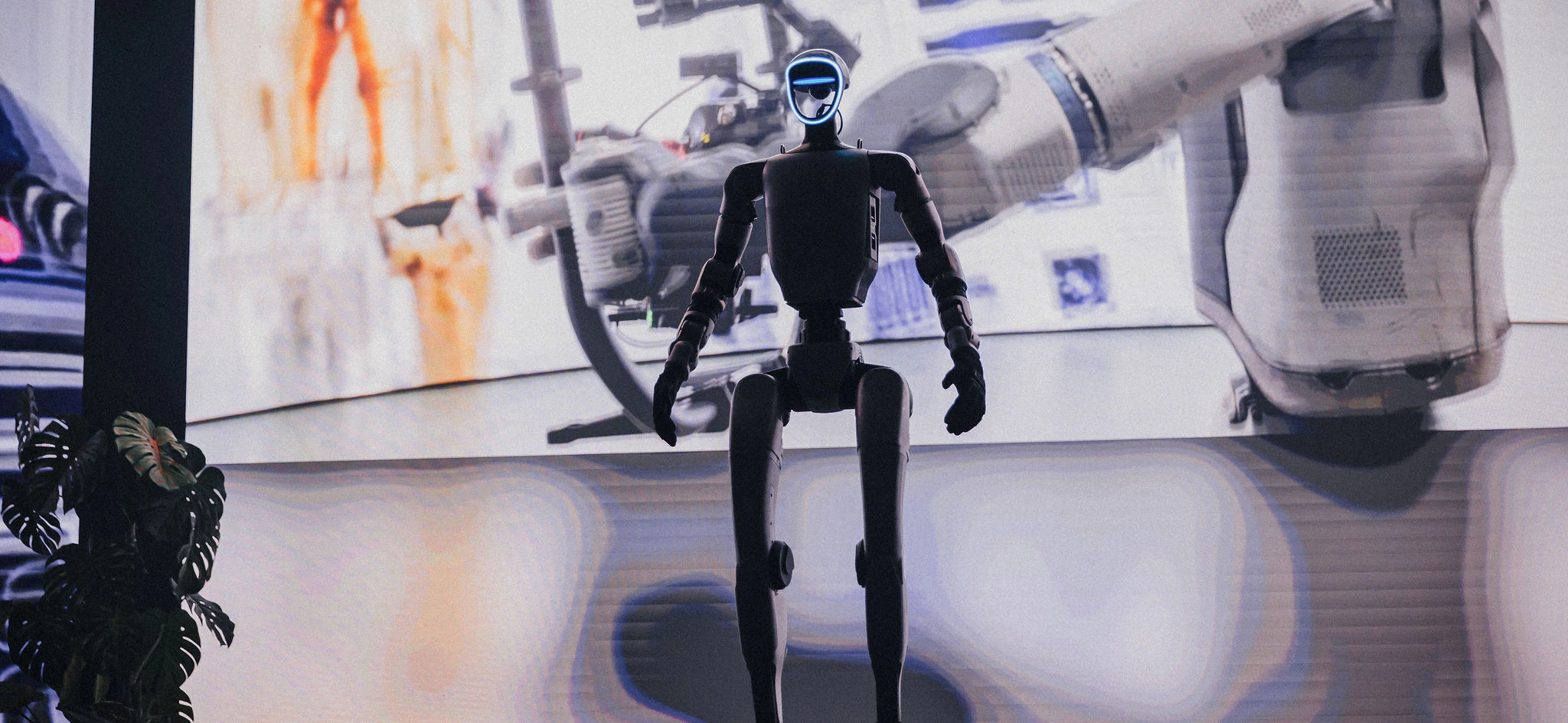
The rapid progress is undeniable. Perry Nightingale, Eunah Lee, and Ora the robot, opened the conference declaring, "We were born too late to discover the Earth. Too early to discover the stars. But just in time for robotics." The agents are here, and they are becoming more capable every day. Ora showed us the progress in robotics since last year with dance moves that put most of the audience to shame.
To summarize: Despite the progress in digital transformation, AI, and technology, the world is, and will remain, more like a jungle than a laboratory. And the future of marketing will not belong to the brands with the most data, the most AI, or the most content. It will belong to the brands that best understand people.
We already look forward to continuing the discussions next year!